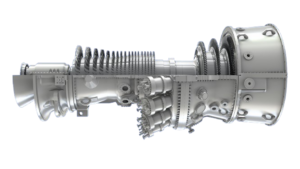
As global energy systems move toward cleaner and more sustainable power generation, the role of gas turbines continues to evolve. Although renewable energy capacity is expanding rapidly, power grids still require dependable, flexible generation to maintain stability when wind and solar output fluctuates.
Gas turbines are therefore expected to remain an important part of the energy mix—supporting renewable integration, industrial growth, grid reliability, and the gradual transition toward lower-carbon fuels.
The Continuing Importance of Gas Turbines
Gas turbines are widely used across power plants, industrial facilities, oil and gas operations, and combined-cycle installations. Their ability to start quickly, respond to changing electricity demand, and deliver reliable power makes them valuable in both developed and emerging markets.
They are particularly important for:
- Providing power during periods of peak demand
- Supporting grids with high levels of renewable generation
- Supplying dependable electricity to industrial facilities
- Replacing less-efficient coal-fired generation
- Supporting power and infrastructure development in growing economies
For countries across the GCC, Middle East, Asia, Africa, and South America, gas turbines continue to offer a scalable solution for meeting increasing electricity demand while supporting long-term energy diversification.
Gas Turbines as a Bridge to a Lower-Carbon Future
The energy transition involves more than simply replacing one source of power with another. Electricity systems must continue operating safely and reliably while renewable infrastructure, energy storage, transmission networks, and alternative fuels are developed.
Gas turbines can support this transition in several important ways.
1. Flexible Power for Renewable-Energy Integration
Wind and solar generation depend on weather conditions and cannot always produce electricity when demand is highest. Gas turbines can increase or reduce output relatively quickly, helping balance changes in renewable generation.
When solar or wind production falls, gas-fired generation can provide backup power and help maintain grid frequency and stability. This flexibility becomes increasingly important as renewable energy represents a larger share of the power-generation mix.
2. Greater Efficiency and Lower Emissions Than Coal
Modern natural gas-fired power plants generally produce fewer carbon emissions than conventional coal-fired plants for each unit of electricity generated.
Combined-cycle gas turbine plants improve efficiency further by using exhaust heat from the gas turbine to produce steam. The steam then drives a steam turbine to generate additional electricity. Advanced combined-cycle facilities can achieve efficiencies exceeding 60% under suitable operating conditions, reducing fuel consumption and emissions per megawatt-hour.
3. Hydrogen-Capable Gas Turbine Technology
Hydrogen is emerging as a potential fuel for lowering emissions from power generation and industrial operations. Major turbine manufacturers are developing and testing systems capable of operating with hydrogen and natural-gas blends, with the long-term goal of increasing hydrogen capability.
When produced using low-carbon energy, hydrogen could help reduce lifecycle carbon emissions. Burning hydrogen does not produce carbon dioxide at the point of combustion, although operators must still manage factors such as nitrogen-oxide emissions, fuel availability, storage, transportation, and equipment compatibility.
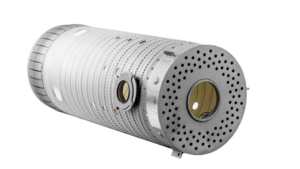
Adapting existing turbine fleets for higher hydrogen concentrations may require modifications to combustion systems, fuel nozzles, controls, valves, piping, and associated auxiliary equipment.
4. Reliable Power for Developing Economies
Many developing economies are experiencing rapid population growth, industrial expansion, and rising electricity demand. These markets require dependable power-generation technologies that can be installed at scale and operated under demanding conditions.
Gas turbines can support this growth while allowing countries to gradually expand renewable generation, energy storage, and modern grid infrastructure. Their operational flexibility also makes them suitable for future hybrid power systems.
Key Innovations Transforming the Gas Turbine Industry
Environmental targets, changing fuel markets, and the expansion of renewable energy are encouraging the turbine industry to develop cleaner and more efficient technologies.
Carbon Capture and Storage
Carbon capture systems can be designed to separate carbon dioxide from power-plant exhaust gases before it reaches the atmosphere. Although integration, cost, and infrastructure remain important considerations, carbon capture could reduce emissions from gas-fired generation in applications where reliable thermal power is still required.
Hybrid Power Plants
Hybrid facilities combine gas turbines with renewable energy, battery storage, or other power-generation technologies. These configurations can improve flexibility, reduce fuel consumption, and provide more consistent electricity output.
A hybrid system may use solar or wind energy when conditions are favorable, battery storage for short-duration balancing, and gas turbines for longer periods of low renewable production or high electricity demand.
Digital Monitoring and Predictive Maintenance
Digitalization is improving the way gas turbines are operated and maintained. Modern monitoring systems can analyze temperature, vibration, pressure, fuel consumption, emissions, and other operating parameters in real time.
Predictive-maintenance tools help operators identify potential problems before they cause forced outages. When supported by accurate inspection data and a dependable spare-parts strategy, these technologies can help:
- Reduce unplanned downtime
- Improve maintenance planning
- Increase equipment availability
- Optimize turbine performance
- Extend the service life of critical components
- Control operating and maintenance costs
The Importance of Spare-Parts Availability
As gas turbines take on more flexible operating roles, many units may experience frequent starts, stops, and load changes. These operating patterns can increase thermal and mechanical stress on critical components.
Reliable access to replacement parts is therefore essential for maintaining availability and supporting planned outages. Important turbine components may include:
- Compressor blades and vanes
- Combustion liners and transition pieces
- Fuel nozzles and fuel-system components
- Crossfire tubes and retainers
- Turbine buckets, blades, nozzles, and shrouds
- Bearings, seals, gaskets, and fastening hardware
- Igniters, flame detectors, and thermocouples
- Control-system and electrical components
- Filters, valves, flanges, and auxiliary equipment
A well-planned sourcing strategy helps operators reduce procurement delays, manage obsolete components, prepare for scheduled maintenance, and respond more effectively to urgent requirements.
Supporting the GCC Energy Transition
The GCC continues to invest in power generation, renewable energy, grid modernization, hydrogen development, and industrial expansion. Gas turbines will remain important for supporting reliable electricity across Saudi Arabia, the United Arab Emirates, Qatar, Kuwait, Oman, and Bahrain.
As regional power systems evolve, owners and operators will need access to dependable components, qualified manufacturers, replacement alternatives, and global supply channels. Effective sourcing will be especially important for maintaining mature turbine fleets while accommodating newer technologies and alternative-fuel requirements.
How SAHM Horizon Supports the Power-Generation Industry
SAHM Horizon is a USA-based industrial supplier and global sourcing partner supporting gas turbine, steam turbine, power-generation, oil and gas, and industrial customers.
We help customers source critical components and industrial equipment from qualified manufacturers and international supply channels. Our sourcing capabilities cover turbine hot-gas-path components, combustion parts, compressor components, bearings, seals, control-system parts, valves, flanges, filtration products, and related auxiliary equipment.
Our goal is to help customers:
- Locate difficult-to-source and obsolete turbine parts
- Support planned outages and maintenance programs
- Reduce procurement lead times
- Identify suitable OEM and aftermarket supply options
- Obtain technical and commercial documentation
- Coordinate international sourcing and delivery
- Strengthen long-term spare-parts availability
With a particular focus on the GCC and international power-generation markets, SAHM Horizon connects industrial customers with sourcing solutions designed to support reliability, efficiency, and operational continuity.
Conclusion
Gas turbines are not simply a technology of the past. They are becoming more flexible, digitally connected, efficient, and compatible with emerging lower-carbon energy systems.
Their ability to balance renewable generation, provide dependable power, and potentially operate with increasing concentrations of hydrogen makes them an important part of the evolving global energy landscape.
As turbine technology changes, reliable access to critical parts and qualified suppliers will remain essential. SAHM Horizon is committed to supporting power producers, maintenance companies, utilities, and industrial operators with responsive global sourcing solutions for today’s equipment and tomorrow’s energy requirements.
Looking for gas turbine parts or industrial sourcing support?
Contact SAHM Horizon to discuss your technical requirements, part numbers, equipment models, quantities, and delivery needs.
Website: www.sahmhorizon.com