Industrial-Grade Flanges & Gaskets for Reliable Sealing
Sahm Horizon supplies high-performance flanges and gaskets engineered to maintain pressure integrity, prevent leaks, and withstand extreme industrial conditions. From standard ANSI flanges to custom gasket solutions, we ensure reliable joints in every critical application.
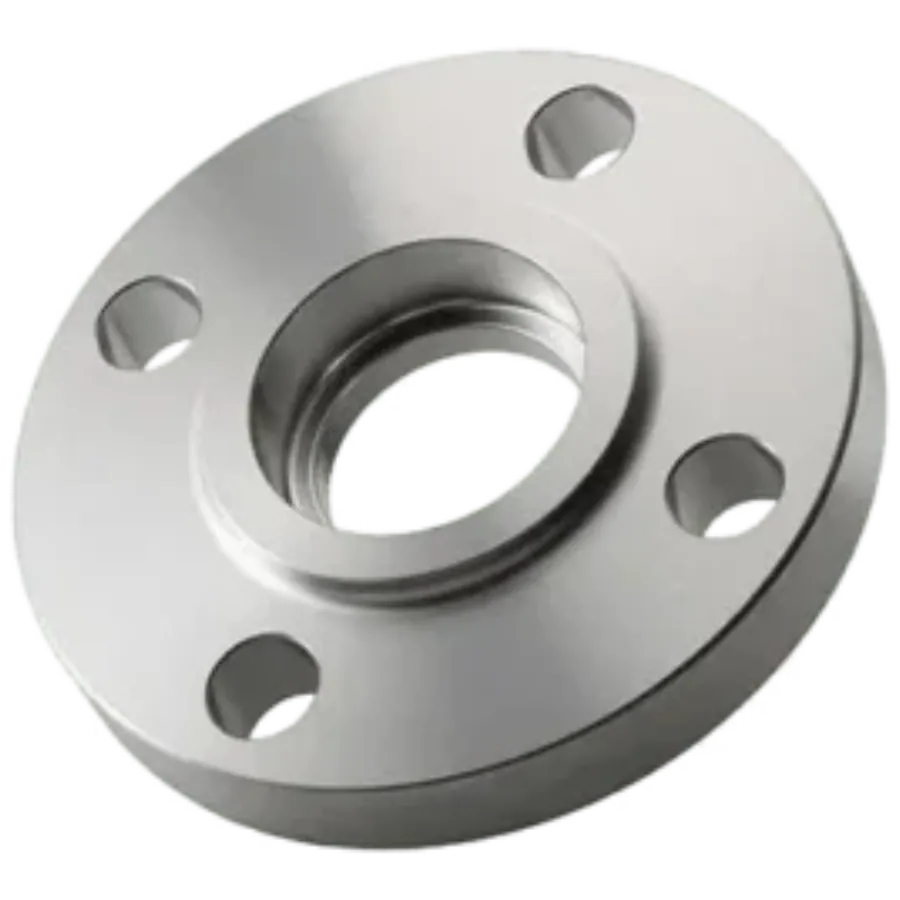
Socket Weld Flange
A Socket Weld Flange is a type of flange that is used for small-bore, high-pressure piping systems. It allows the pipe to be inserted into a recessed socket, then fillet welded around the outer edge. This design provides good strength and leak-proof joints while being easier to align than butt-weld types.
🔧 Product Features of a Socket Weld Flange
• Suitable for high-pressure and high-temperature systems.
• Common in sizes from ½” to 2”, rarely used above 4”.
• Pressure classes: ANSI 150, 300, 600, 900, 1500.
• Raised Face (RF) – Standard for sealing with gaskets.
• Flat Face (FF) – Used in specific cases (e.g., cast iron equipment).
• RTJ also possible for high-pressure needs.
• Carbon steel (ASTM A105), stainless steel (304, 316), alloy steels, duplex, etc.
• Chosen based on media, temperature, and corrosion needs.
• Conforms to ASME B16.5, B16.11 for socket weld dimensions.
• Also available per EN, DIN, and JIS standards.
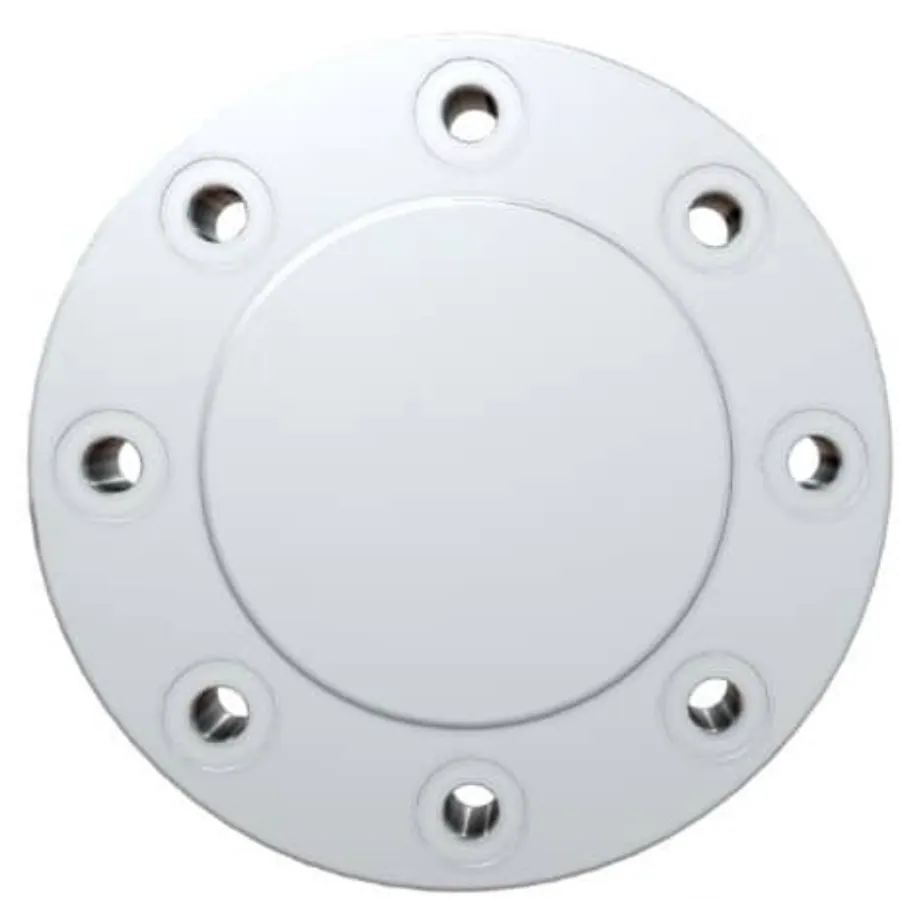
Blind Flange
A blind flange is a solid disk used to block off a pipeline or create a stop in a piping system. It is bolted in place between two flanges and does not have a center hole like other flanges.
🔧 Product Features of a Blind Flange
• Designed to seal the end of a piping system or pressure vessel.
• Used when future extensions or testing is required.
• Available in various pressure classes (e.g., ANSI 150, 300, 600, 900, 1500, 2500).
• Designed to handle internal pressure and system stress.
• Carbon steel, stainless steel, alloy steel, duplex, and specialty metals.
• Material selected based on corrosion resistance, temperature, and media compatibility.
• Typically from ½” to 48” and beyond (custom sizes also available).
• Standardized per ASME/ANSI, DIN, EN, JIS, and other international norms.
• Raised Face (RF)
• Flat Face (FF)
• Ring Type Joint (RTJ)
• Custom finishes based on sealing needs
• Designed for use with standard gaskets (spiral wound, ring gaskets, etc.).
• Ensures tight sealing and leak prevention.
• Matches standard bolt patterns for compatibility with mating flanges.
• Easy installation and removal.
• Often pressure-tested to verify integrity.
• Supplied with Mill Test Certificates (MTC) or EN 10204 3.1/3.2 certificates if needed.
• Used in oil & gas, petrochemical, water treatment, power generation, and general industry.
• Ideal for maintenance, inspection, or system modifications.
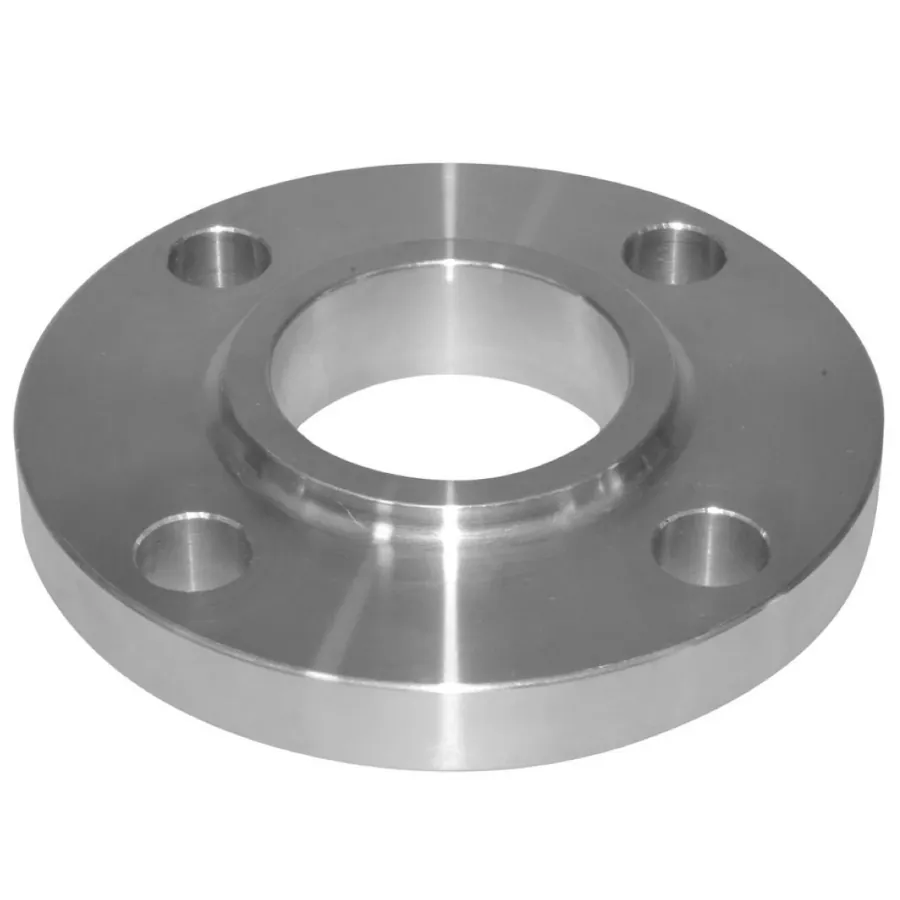
Slip On Flange
A Slip-On Flange (SO Flange) is a type of flange that slides over the pipe and is then fillet welded at both the inner and outer edges to provide strength and prevent leakage. It is one of the most common and cost-effective flange types, especially in low-pressure, non-critical applications.
🔧 Product Features of a Slip-On Flange
• Pipe slips into the bore of the flange before welding.
• No need for precise pipe cutting — easier alignment than weld neck flanges.
• Welded both on the inside and outside of the flange face.
• Provides sufficient strength for low- to moderate-pressure applications.
• Available in carbon steel, stainless steel, alloy steel, and special alloys (Inconel, duplex, etc.).
• Material chosen based on process media and temperature conditions.
• Typically available in ANSI/ASME Classes 150, 300, 600, and sometimes 900.
• Not recommended for ultra-high pressure or critical systems due to weaker weld integrity compared to butt-weld flanges.
• Raised Face (RF) – Most common, for sealing with gaskets.
• Flat Face (FF) – Used when mating with cast iron or non-metallic flanges.
• Usually from ½” to 48”, per ASME B16.5 or other international standards.
• Larger diameters available per ASME B16.47 (Series A/B).
• ASME B16.5 (for sizes up to 24”)
• ASME B16.47 Series A/B (for 26” and above)
• EN, JIS, DIN, GOST standards also available
• Low-pressure fluid systems like:
• Water lines
• Firefighting systems
• HVAC
• Oil & gas utilities (non-critical lines)
• Cheaper to manufacture than weld neck or socket weld flanges.
• Lower labor cost for installation.
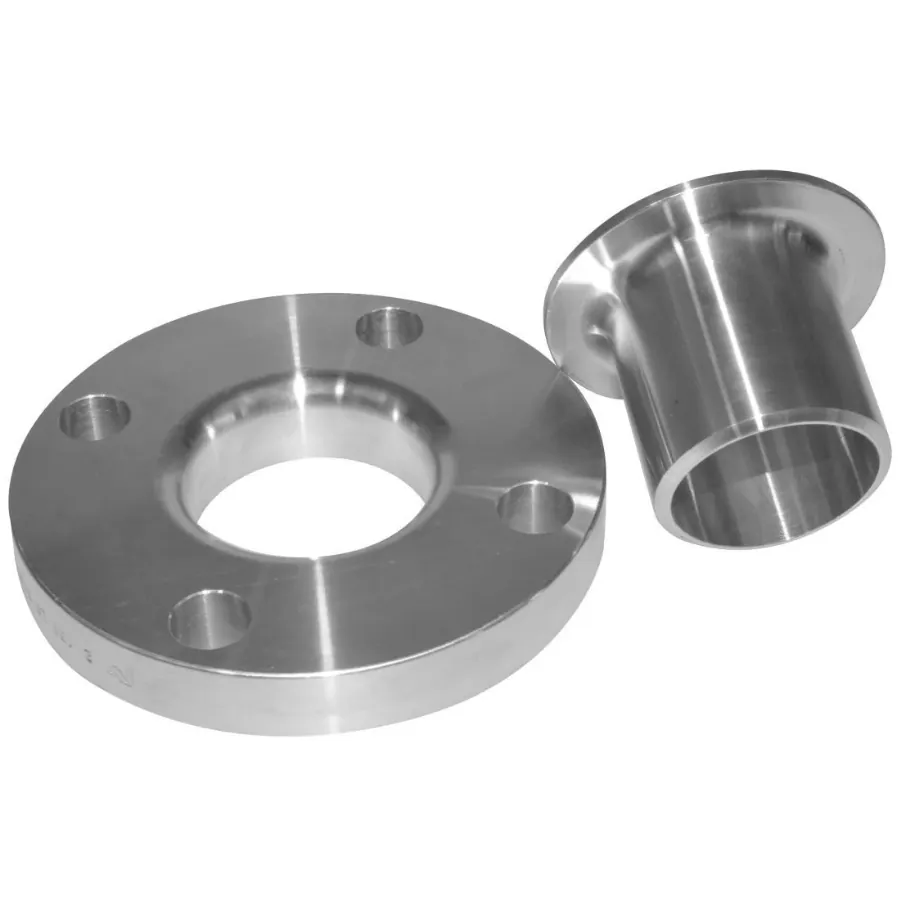
Lap Joint Flange
A Lap Joint Flange (LJ Flange) is a two-piece assembly used with a stub end. The flange itself does not come into direct contact with the fluid, making it ideal for systems requiring frequent disassembly or corrosion resistance without using high-cost alloys for the entire flange.
🔧 Product Features of a Lap Joint Flange
• Lap Joint Flange: A loose, ring-like flange with a flat face and a radius at the bore to accommodate the stub end.
• Stub End (or Lap Joint Stub End): A short piece of pipe with a butt-welded end that contacts the fluid and interfaces with the flange.
• The flange slides over the pipe and rotates freely around the stub end.
• Makes bolt alignment easier, especially in tight spaces.
• The stub end is butt-welded to the pipe, not the flange itself.
• The flange remains loose and un-welded.
• Always has a flat face (FF).
• The sealing surface comes from the back face of the stub end, not the flange.
• You can use expensive, corrosion-resistant materials (e.g., stainless steel, Inconel) for the stub end only.
• The flange can be made of lower-cost material (e.g., carbon steel).
• Commonly from ½” to 24”.
• Pressure classes: ANSI 150, 300, 600 (occasionally higher).
• ASME B16.5 and B16.47 compliant.
• Ideal for:
• Systems that require frequent disassembly (e.g., inspection, cleaning).
• Corrosive environments, especially when cost savings are important.
• Low to moderate pressure systems in:
• Chemical plants
• Water treatment
• Food and pharmaceutical industries
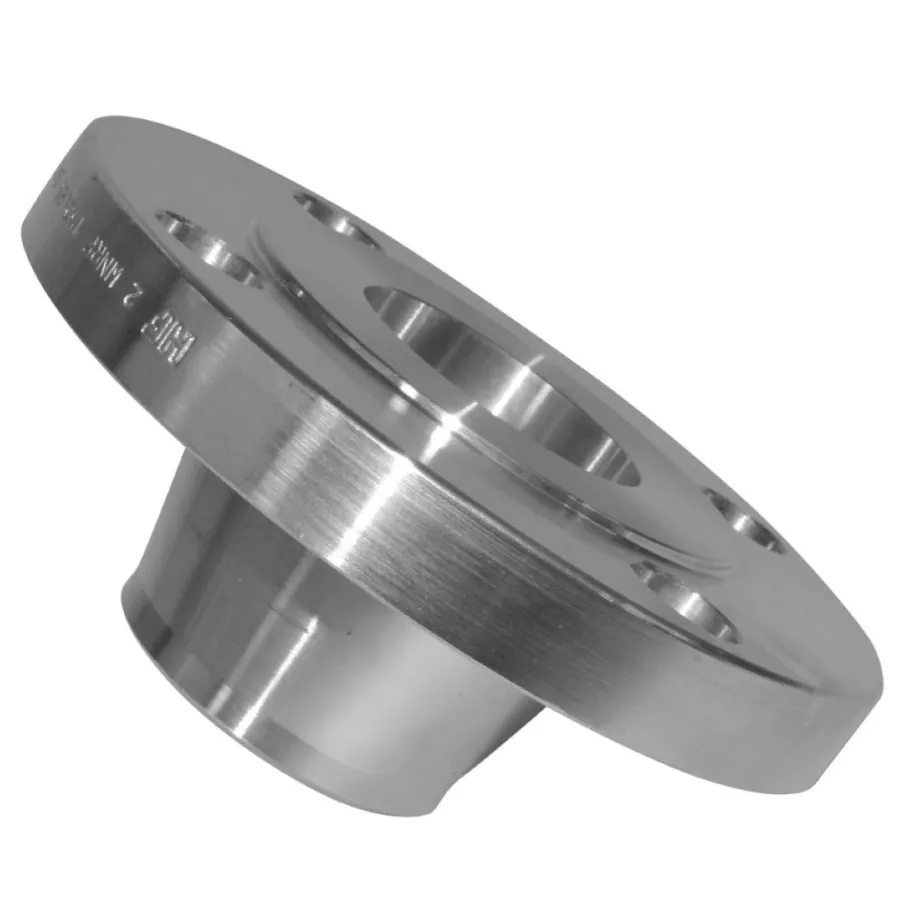
Welded Neck Flange
🔧 Product Features of a Weld Neck Flange
• Long, tapered neck (hub) gradually transitions thickness from flange to pipe wall.
• Reduces stress concentration and improves strength.
• Welded to the pipe with a full-penetration butt weld.
• Provides strong, leak-proof, and permanent joints.
• Excellent flow characteristics due to smooth transition.
• Suitable for extreme conditions — typically used in pressure class ratings from ANSI 150 to 2500.
• Ideal for high-load, vibration, and thermal cycling environments.
• Raised Face (RF) – Most common, used with gaskets for pressure sealing.
• Ring Type Joint (RTJ) – Used in high-pressure systems with metal ring gaskets.
• Flat Face (FF) – For low-pressure, non-critical applications.
• Carbon steel (ASTM A105, A350)
• Stainless steel (304, 316, 321, etc.)
• Alloy steel, duplex, Inconel, Hastelloy, etc.
• Choice depends on medium, temperature, and corrosion requirements.
• Manufactured per ASME B16.5, B16.47, or other international standards (EN, DIN, JIS).
• Size range: ½” to 60” and beyond (custom flanges available).
• Oil & gas, petrochemical, chemical, power generation, and offshore platforms.
• Common in high-stress applications like:
• High-pressure steam lines
• Hydraulic systems
• Critical process piping
• Supplied with dimensional inspection reports, hydrostatic test reports, and material test certificates (MTCs per EN 10204 3.1 or 3.2).
• NDT (Non-Destructive Testing) optional depending on project specs.
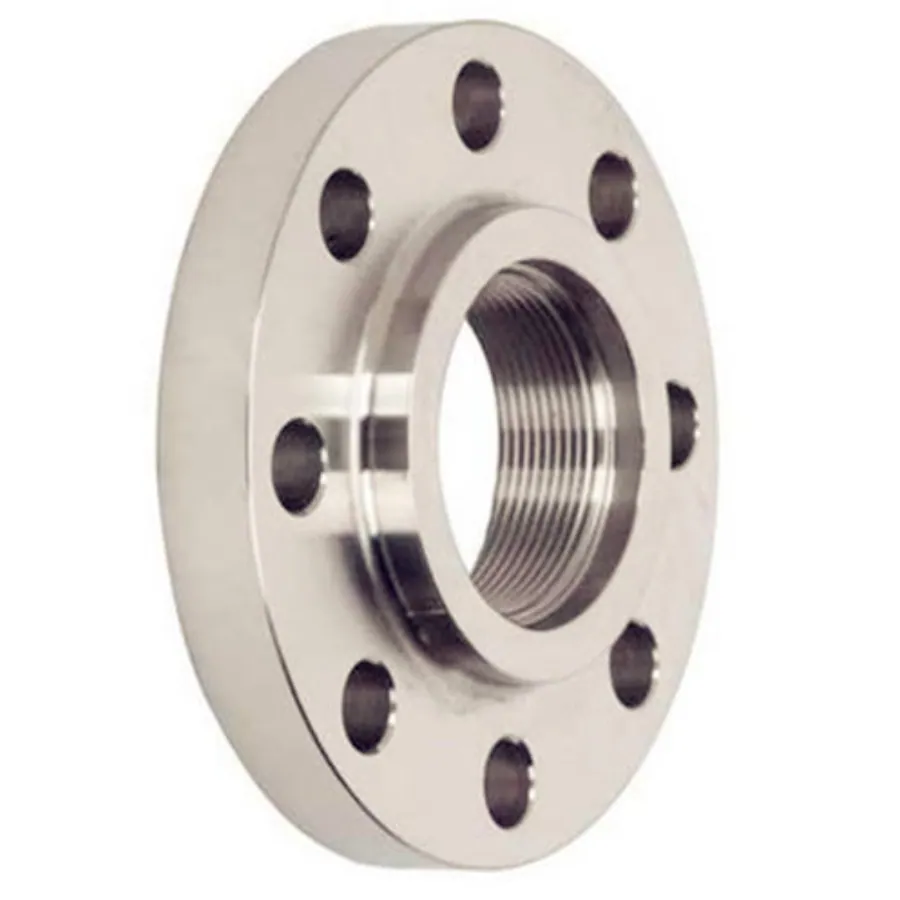
Threaded Flange
🔧 Product Features of a Threaded Flange
• The flange is bored with threads that match the external threads of the pipe.
• Typically NPT (National Pipe Thread) in the U.S. or BSPT (British Standard Pipe Taper) in international markets.
• Easily installed without welding—ideal for flammable, hazardous, or highly reactive environments where welding could be dangerous.
• Can be reused and removed for maintenance.
• Suitable for low to moderate pressure and temperature applications.
• Common pressure classes: ANSI 150, 300, 600 (rarely above that due to mechanical limits of threading).
• Raised Face (RF) – Most common.
• Flat Face (FF) – Used when mating with flat-faced equipment or cast iron flanges.
• RTJ (Ring Type Joint) – Rare for threaded flanges, but available for higher sealing performance.
• Carbon steel (ASTM A105), stainless steel (304, 316), forged steel, alloy steel.
• Corrosion-resistant alloys for chemical and marine applications.
• Typically available from ½” to 4”.
• Not generally used above 4” due to threading difficulties and reduced strength.
• ASME B16.5 for dimensional and pressure requirements.
• Threads per ANSI/ASME B1.20.1 (NPT) or ISO 7-1 (BSP).
• Piping systems where welding is not possible or desirable.
• Hazardous environments (e.g., flammable gas/fuel systems).
• Temporary installations or systems needing regular disassembly.
• Low-pressure water, air, or oil lines in plants, refineries, or chemical processing.