
Gate, globe, ball, butterfly and check valves are not variations on a theme. Each does one job well and the others badly, and most valve problems in service trace back to one being asked to do another one’s work.
Isolation: gate valves
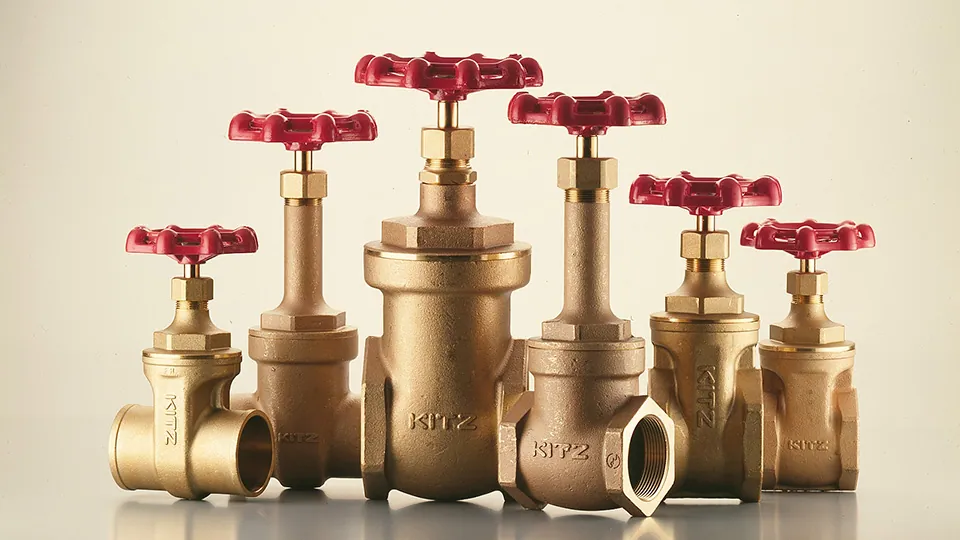
A gate valve lifts a flat gate clear of the flow path. Fully open it presents almost no restriction and very little pressure drop.
It is an isolation valve, not a control valve. Held part open, the gate vibrates against the seat and the seating faces wear, and the valve that was meant to shut off a line no longer shuts off a line. Use it open or closed.
Quarter turn: ball valves
A rotating ball with a bore through it. A quarter turn takes it from shut to fully open, which makes it fast to operate and easy to automate. It seals tightly, and it holds that seal well at high pressure.
Large bore: butterfly valves
A disc rotates in the flow. The disc stays in the stream, so there is always some restriction, but the valve is light, short in face to face dimension and far cheaper than a gate valve of the same bore. On large diameter water and HVAC systems that trade is usually worth making.
Throttling: globe valves
The fluid changes direction through a globe valve, which costs pressure drop but gives real control over flow. Where a line is regulated rather than isolated, this is the valve.
Non return: check valves
A check valve has no operator. Flow in one direction opens it and reverse flow closes it, which protects a pump from spinning backwards when it stops. Because nothing drives it, orientation and the correct type for the service matter more than people expect.
Strainers belong in the same conversation
A Y strainer suits low flow and tight spaces. A basket strainer holds far more dirt before it needs cleaning, which suits larger systems with a heavy debris load. Fitting the wrong one means either frequent cleaning or an unnecessary pressure drop.
Choosing
Start with the duty. Isolation, regulation or protection. Then the bore, then the pressure class, then how often it will be operated. The full range with pressure classes and applications is on our valves and strainers page.
